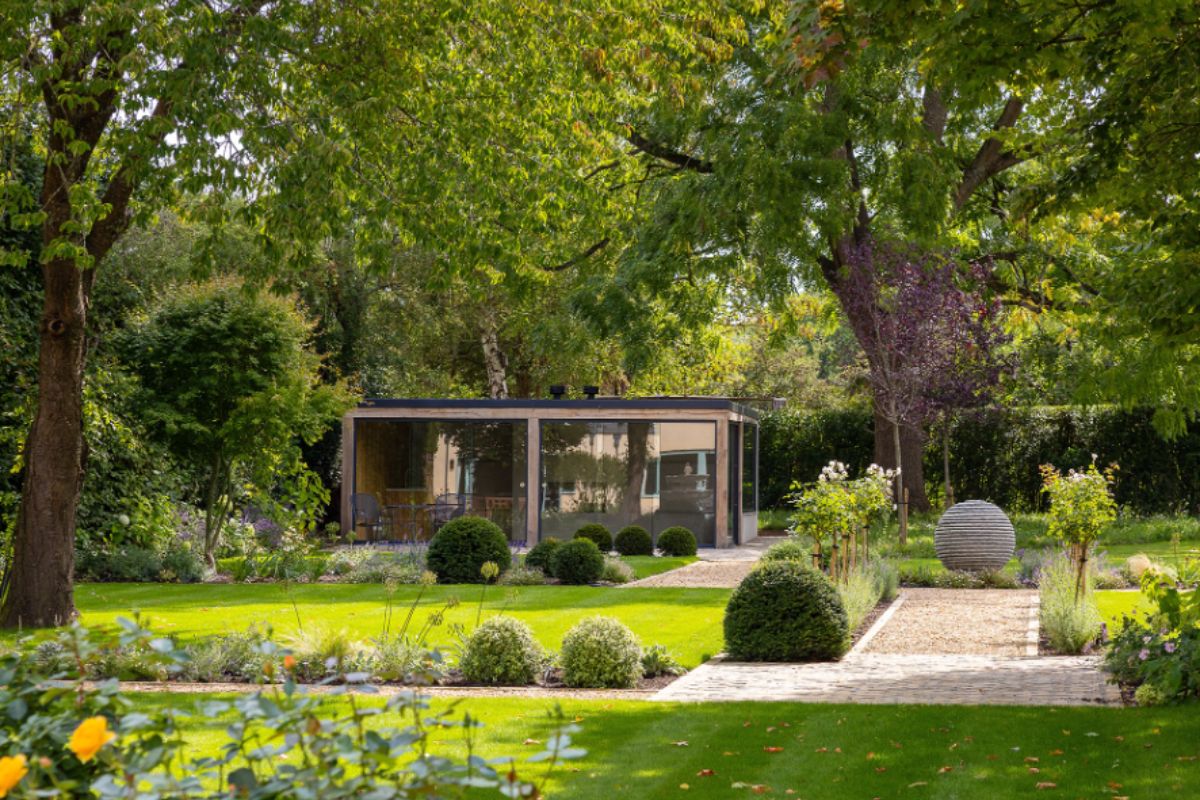
Creating an outdoor kitchen is one of the best ways to transform your garden into a true extension of your home.
In fact, 86% of home buyers say they want a patio or outdoor living area, highlighting just how important functional outdoor spaces have become.
Whether you’re hosting summer barbecues, enjoying family meals outdoors or entertaining friends, a thoughtfully designed outdoor kitchen can enhance both your lifestyle and your property’s appeal.
If you’re wondering how to design the perfect outdoor kitchen, there’s much more to consider than choosing a barbecue and some worktops.
A successful garden design with an outdoor kitchen combines thoughtful layout, durable materials, practical functionality and beautiful planting to create a space that works seamlessly for cooking, dining and relaxing throughout the year.
Let’s explore the key elements to consider when designing the perfect outdoor kitchen for your garden.
1. Choose the Perfect Location
One of the most important decisions you’ll make is where to position your outdoor kitchen. While it can be tempting to place it in the furthest corner of the garden to maximise space, convenience should be a key consideration.
Ideally, an outdoor kitchen should feel like a natural extension of both your home and your garden. Positioning it within easy reach of the house creates a seamless connection between indoor and outdoor living, making it easier to carry ingredients, serve meals and clear away afterwards.
For example, if you regularly find yourself making multiple trips to the fridge or kitchen sink while entertaining, an outdoor kitchen tucked away at the far end of the garden can quickly become inconvenient. Instead, placing it close to the house allows it to function as part of the main living space, while still opening onto the garden.
This approach also offers functional benefits. According to Homes & Gardens, the further an outdoor kitchen sits from the house, the more expensive utility runs for water, drainage and electricity typically become.
Positioning it closer to your home can therefore help reduce installation costs, in addition to creating a space that’s efficient to use and beautifully integrated into your garden.
2. Plan a Practical Layout
As outdoor living becomes a bigger part of everyday life, designing a space that’s easy to use is more important than ever.
According to the International Casual Furnishing Association’s 2025 Outdoor Living Trend Report, 60% of homeowners say they would spend more time with family and friends outdoors after improving their outdoor space, while 55% would dine outside more often.
This highlights that outdoor kitchens are no longer used just for the occasional summer barbecue. They’re becoming social hubs where people gather, eat, and spend quality time together. Planning dedicated zones for each activity helps create a space that feels organised, comfortable and easy to use, even when you’re entertaining guests.
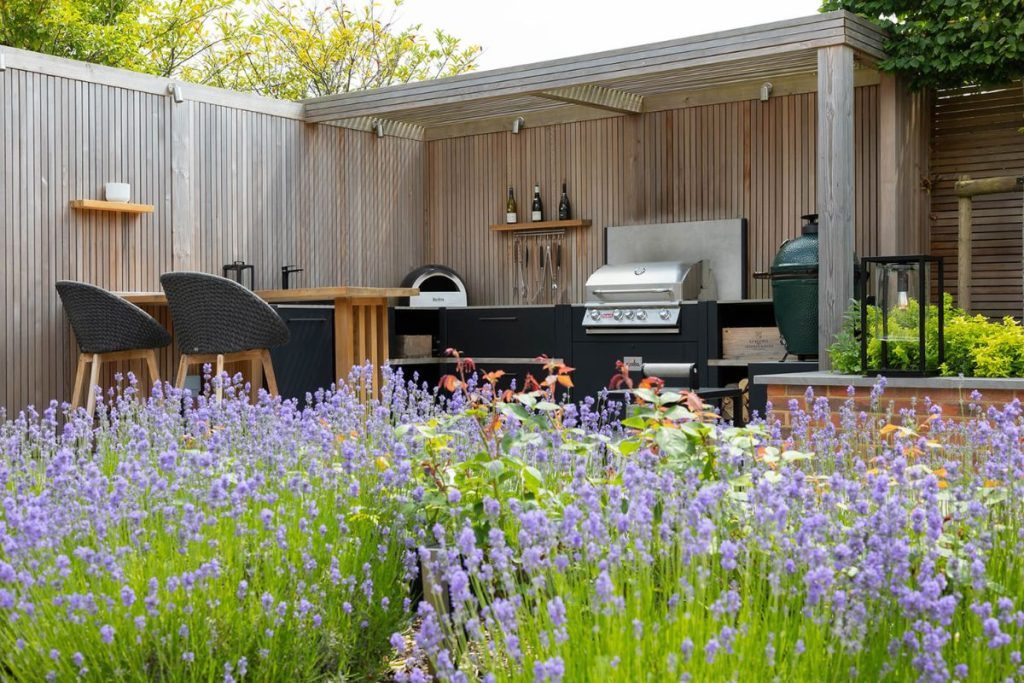
Think about the different activities that will take place in the space. You’ll need room for preparing ingredients, cooking, serving and dining, as well as enough space for people to move between each area without disrupting whoever is at the grill.
When designing your outdoor kitchen layout, aim to create distinct but connected zones that support a natural flow between preparing food, cooking, serving and socialising.
3. Include the Right Appliances
Rather than focusing solely on the barbecue, think about the appliances that will make preparing food, cooking and entertaining easier.
This shift towards fully functional outdoor living is reflected in current design trends.
Homeowners are increasingly choosing built-in grills, beverage fridges, pizza ovens, sinks, and generous preparation areas to create fully equipped outdoor living spaces, instead of just another place to barbecue.
However, it’s often the purpose-built additions that make the biggest difference to how the space functions day-to-day.
Homes & Gardens recently highlighted the outdoor sink as one of the features homeowners most regret leaving out, with designers explaining that constantly returning indoors for food preparation, hand washing or cleaning interrupts the flow of cooking and entertaining.
As well as a sink, consider incorporating plenty of worktop space, built-in storage and refrigeration to keep everything within easy reach. Together, these features create a self-sufficient outdoor kitchen where you can prepare, cook, serve and socialise without repeatedly heading back into the house. This results in an outdoor kitchen that’s both practical and enjoyable to use for years to come.
4. Choose Durable, Weather-Resistant Materials
Your outdoor kitchen will be exposed to the elements every day, so durability should be just as important as appearance. Unlike an indoor kitchen, outdoor surfaces must withstand UV exposure, moisture, fluctuating temperatures and everyday wear, making weather-resistant materials essential.
That’s why design experts recommend choosing materials specifically designed for outdoor environments before prioritising aesthetics. By investing in weather-resistant materials from the outset, you’ll spend less time on maintenance and more time enjoying your garden.
It’s equally important to think about what not to use. Materials commonly found in indoor kitchens, such as laminate, untreated wood and many types of quartz, aren’t designed to withstand prolonged exposure to sunlight, moisture and changing temperatures. Over time, they can fade, warp or deteriorate, leading to unnecessary repairs and replacements.
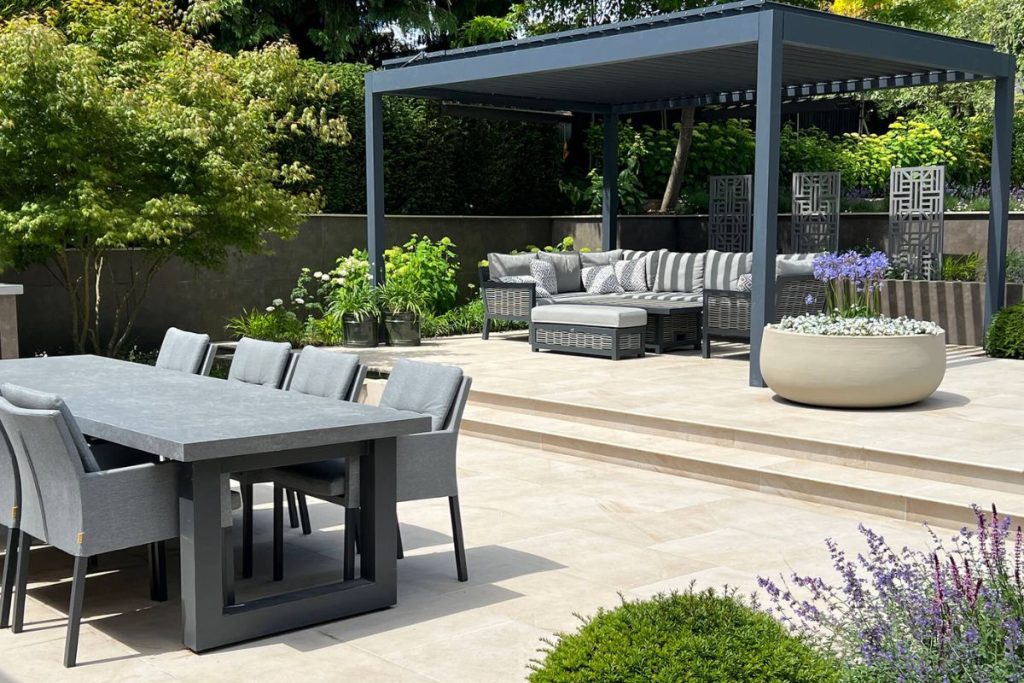
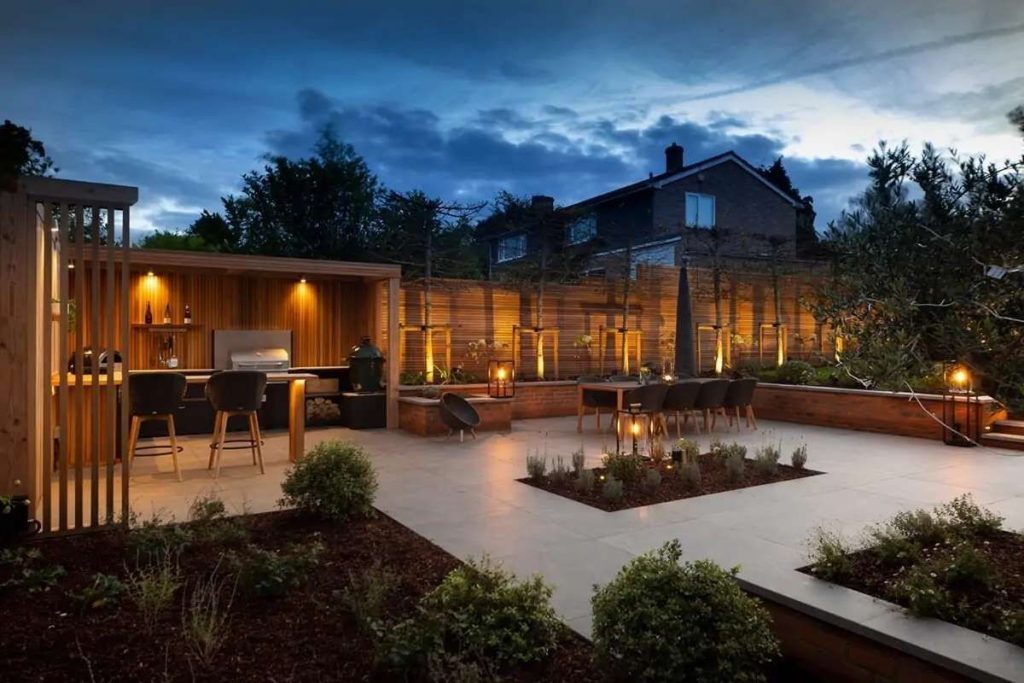
Finally, consider how your material choices contribute to the overall garden design. Rather than treating your outdoor kitchen as a separate feature, choose paving, walling and finishes that are already used elsewhere in your garden.
For example, extending the same porcelain paving from your patio into the outdoor kitchen can create a clean, contemporary look, while matching natural stone used in pathways or retaining walls helps achieve a cohesive design in more traditional gardens.
Repeating materials throughout the space creates visual continuity, helping the outdoor kitchen feel connected to the wider garden rather than a standalone addition. The result is a space that flows naturally between cooking, dining and relaxing, while enhancing the overall character of your garden.
How Can We Help
If you’re wondering how to design the perfect outdoor kitchen, you’ll need to choose a garden location that’s easily accessible from your home, plan a layout with dedicated zones, select appliances that suit your lifestyle, and invest in weather-resistant materials that are complementary to your garden design.
At Raine Garden Design, we believe an outdoor kitchen should enhance the way you enjoy your garden. Whether you’re creating a dedicated entertaining space or incorporating an outdoor kitchen into a complete garden transformation, our experienced designers can help you create a bespoke design that reflects your lifestyle, complements your home and makes the most of your outdoor space.
Get in touch with us today to discuss your project and discover how we can help bring your dream outdoor kitchen to life.