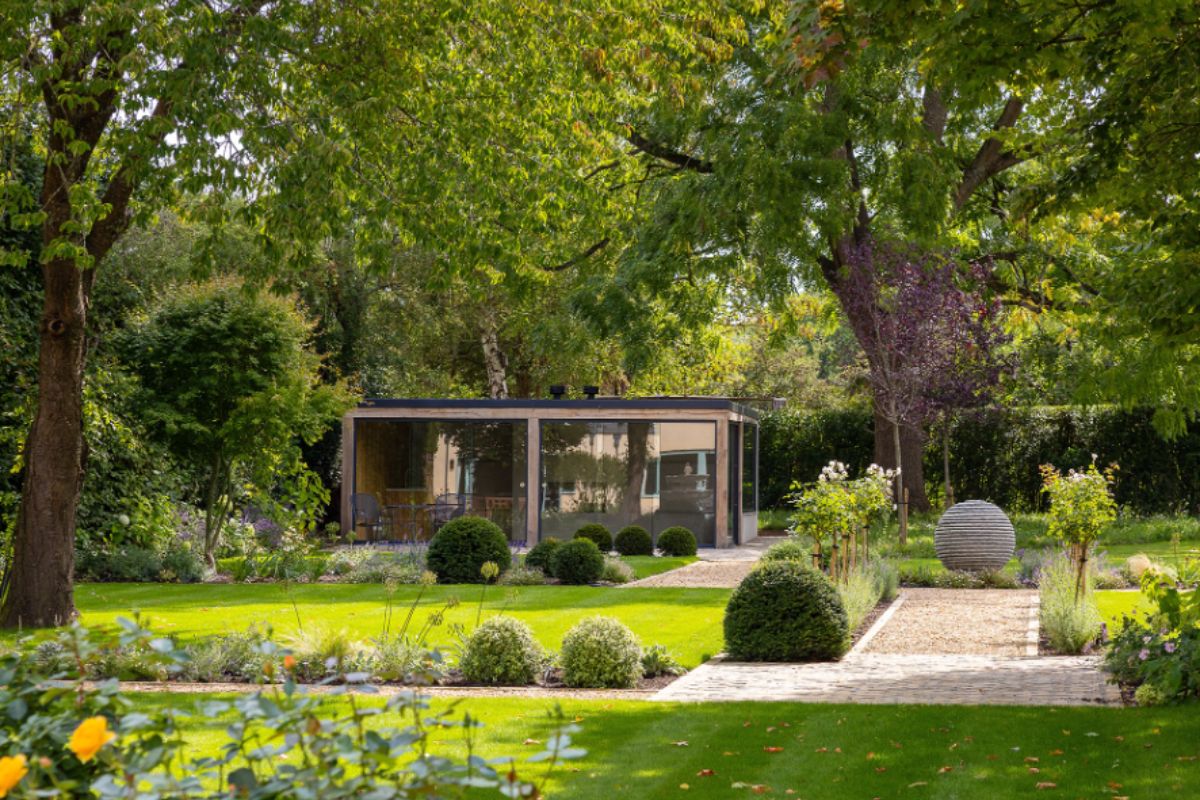
As the evenings draw closer and gardens across the UK turn golden, it’s easy to think of the outside space as a summer-only luxury, something to be shut away and forgotten about until spring.
That’s a lot of gardens sitting unused for half the year, not because the weather makes it impossible, but because the space itself hasn’t been designed with the colder months in mind.
A back garden built for long summer evenings needs a different kind of thought once autumn sets in. Shelter, warmth, and texture start to matter far more than open space and shade.
However, with a little thought given to autumn garden design, your outside space can become one of the cosiest parts of your home for months to come.
We’ll explore some of our top autumn garden design tips below, showing you how to turn your garden into an enjoyable space to spend time in as the temperature drops.
1. Create Sheltered, Wind-Protected Seating Areas
A beautiful seating area is no use to anyone if it’s exposed to every gust of wind coming across the garden. UK wind speeds are highest in autumn and winter compared to spring and summer, exactly when an unsheltered patio or bench starts to feel unusable.
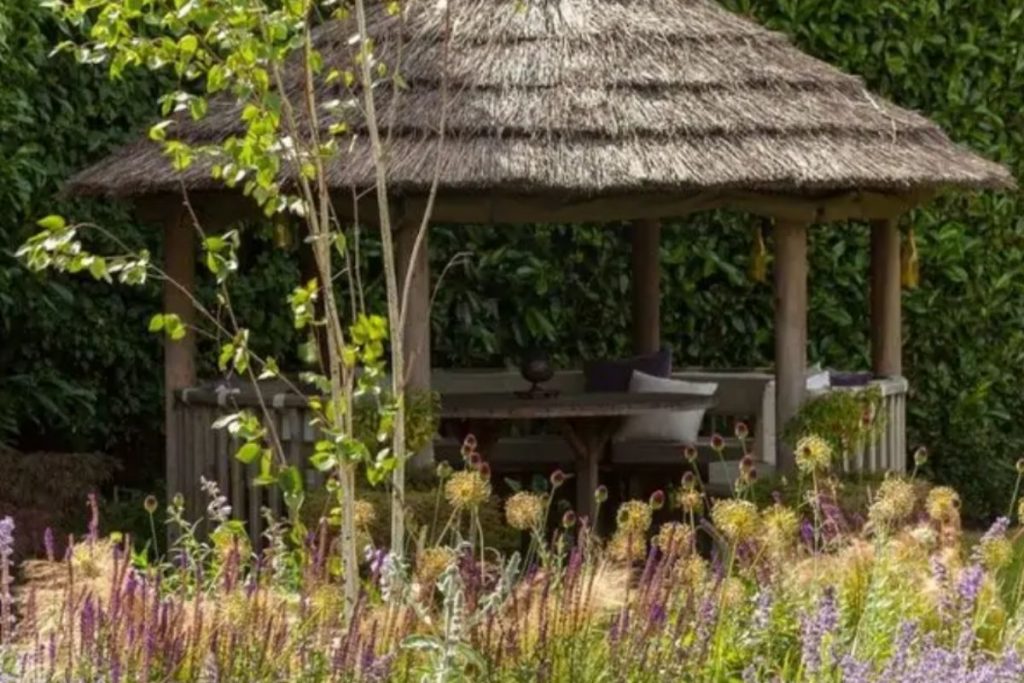
The good news is that shelter doesn’t mean sacrificing the openness of the garden. A permeable windbreak, whether hedging, slatted screening, or a well-placed pergola, can reduce wind speed by 50 to 75%, without blocking light or views the way a solid fence would.
A simple way to start is to notice where the wind actually hits hardest on a breezy day. This is often not where you’d expect; funnelling between buildings or along fence lines rather than spreading evenly.
Corners tucked behind existing structures or dense planting tend to stay calmer, making them the best spots to build a seating area around. Adding a windbreak upwind of that spot, rather than directly around the seating itself, gives the wind room to slow down before it reaches you. This is what makes a space feel genuinely protected rather than just blocked off.
2. Introduce Fragrance and Sound for Sensory Warmth
Cosiness isn’t only about temperature; it’s about how a space engages the senses. A garden that smells and sounds inviting feels warmer than one that’s simply sheltered from the wind, even on a chilly afternoon.
The trick is placement, not just plant choice. Position fragrant plants close to a seating area, doorway, or path rather than at the back of a border, since fragrance needs to travel a short distance to actually be noticed.
Examples like Elaeagnus, Viburnum x bodnantense, or Mahonia all flower between November and February, so even one well-placed shrub can carry a garden’s scent through the coldest months. Choose a protected spot for them too, since still air holds fragrance far better than an exposed, windy corner.
Sound works the same way. Let tall, rustling grasses, such as miscanthus or stipa, stand through autumn rather than cutting them back, and plant them somewhere they’ll catch the breeze near where you sit.
For an easy finishing touch, leave a path unswept so dry leaves add sound underfoot, or hang wind chimes in a sheltered corner rather than an exposed one, where they’ll ring gently instead of clattering.
3. Bring in Warmth with Fire and Light
Nothing signals a cosy garden faster than the flicker of firelight.
Average UK temperatures drop from around 16°C at the start of September to as low as 3°C by the end of November, but a well-placed fire pit or chiminea instantly extends the usable life of your garden through that decline. This gives you and your guests a reason to stay outside after dark rather than retreating indoors.
Position matters more than most people expect. A fire feature works best in a spot that’s already sheltered from wind, as even a gentle breeze can send smoke and sparks in unpredictable directions. It should sit far enough from planting, fencing, and structures to meet basic safety clearances.
Pair it with a hard, level surface like paving or gravel rather than decking or lawn, both for safety and so heat doesn’t damage the ground beneath it.
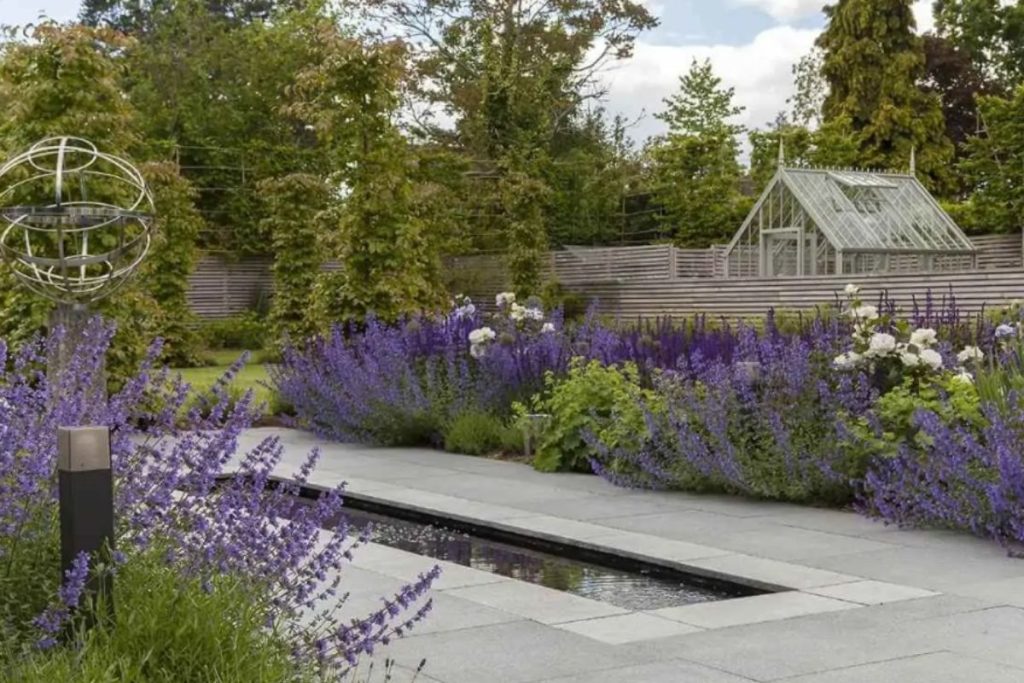
Good lighting can keep the warmth going once the fire’s not lit. Consider festoon lights strung through a pergola, low-level path lighting, or soft lanterns tucked among the planting, so the whole garden continues to feel inviting after dark.
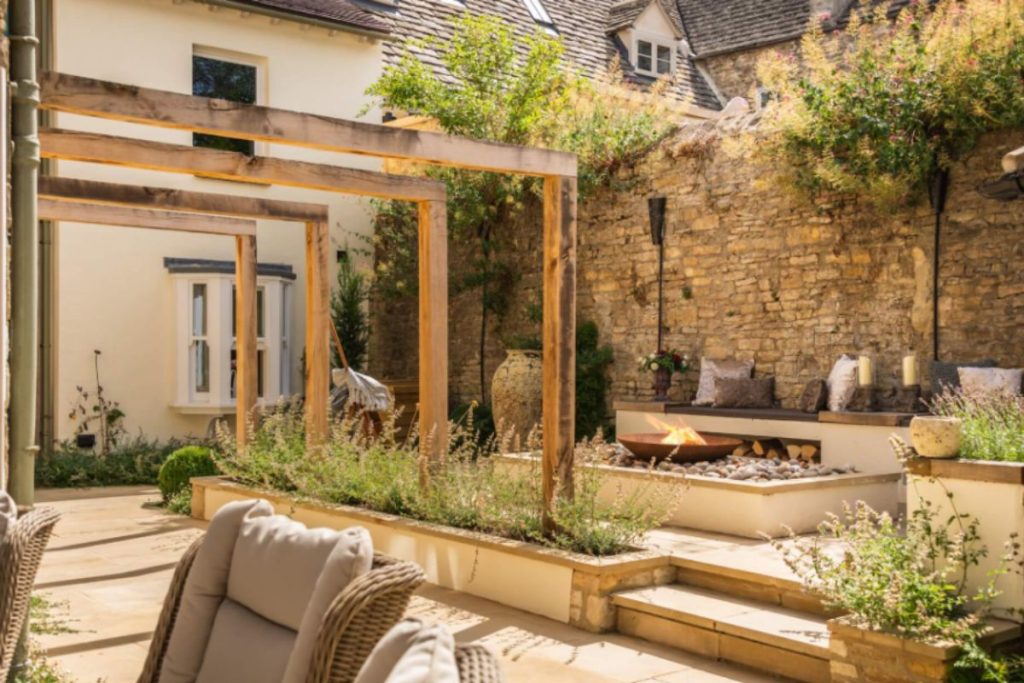
4. Add Texture with Natural, Tactile Materials
Cosiness is as much about touch as it is about sight. Hard, glossy surfaces like polished porcelain can look sharp in summer, but they can feel cold and uninviting the moment the weather turns. Softer, more tactile materials carry warmth in a way that’s hard to fake.
Timber decking, woven willow screening, and natural stone all bring a texture that feels warmer to the touch than smooth paving or render, so it’s worth keeping in mind for new hard landscaping.
But if your patio or paving is already in place, you don’t need to rip anything out to add warmth. A few simple layers on top, like a wool or sheepskin throw over an outdoor sofa, or cushions in a heavier weave, go a long way toward making a garden feel like an extension of the home rather than a separate, colder space.
Getting this right matters more once construction is underway, since not every “natural” material performs well outdoors through a British autumn.
This is where working with experienced landscape designers can help. They know which timbers, stains, and finishes hold up to repeated wetting and drying. That knowledge is what separates a patio that looks good for one autumn from one that still looks good in five.
How We Can Help
Whether you’re looking for a tailored planting plan to bring scent and colour through autumn, or a full redesign that adds shelter, warmth, and year-round structure, we offer an initial consultation and would love to help bring your ideas to life.
At Raine Garden Design, we have over 22 years of experience creating stunning garden designs for clients throughout Surrey, Sussex, Berkshire, and Hampshire.
We have won five awards for gardens at the RHS Hampton Court Palace Flower Show, and our award-winning designer, Raine Clarke-Wills, has worked on hundreds of garden projects, ranging from new-build gardens to impressive country estates.
You can contact Raine by email at studio@rainegardendesign.co.uk or by telephone on 07702 042559.