With the recent glorious weather across the UK, many of us have found ourselves spending more time outdoors. To make the garden an extension of your home, you likely want to create an outdoor seating area that still feels cosy, comfortable and relaxing in the heat.
There’s something magical about carving out a snug corner of your garden to act as a little sanctuary: a place that invites you to unwind while equally acting as a place to entertain.
This step-by-step guide offers thoughtful ideas to help you craft a cosy outdoor seating area that blends comfort, style and expert design.
1. Identify the Perfect Spot
The first step is to choose a quiet area that has some shelter. It’s up to your personal preference whether you’d like a fully sheltered area or if you’d like the opportunity to sit in the sun!
Consider where you naturally gravitate to in your garden. Think about those moments when the light feels just right or a calm corner that relaxes you instantly. Perhaps choose an area beneath a pergola, next to a mature tree or nestled against any existing walls or structures. Identifying the right spot will allow you to foster a sense of privacy and comfort.

If the area you’ve chosen is quite exposed, consider incorporating climbing plants, layered planting or trellis panels. These will act as windbreaks while creating a relaxing, cocooned environment.
2. Define the Space
Once you’ve identified your space, it can be helpful to create intention and structure by defining the seating area. This doesn’t have to be a huge landscaping job. Subtle additions such as paving stones, decking, or an outdoor rug can visually distinguish your seating zone as a place to pause and rest.
You could also incorporate planters, raised beds or low hedging to define the perimeter while adding visual texture.
At Raine Garden Design, we often use a mixture of materials to soften hard landscaping and integrate it harmoniously with planting. For instance, in our recent APL Award‑finalist garden, we combined dark‑chocolate porcelain stone paving with vertical cedar slats to create textural contrast and warmth across multiple levels.
3. Select Comfortable, Water-Resistant Furniture
Furniture lies at the heart of any outdoor seating area. It sets the tone for the purpose of your seating area, whether that is relaxing with your family, hosting drinks with friends, or finding peace in the mornings.
Prioritise comfort by choosing deep cushions which entice you to sink in and stay a while. Search for high backs and wide seats to support you for longer lounging sessions, as well as wide armrests to perch books or drinks on.

Choosing Durable Furniture Materials For Comfort and Longevity
When creating your outdoor cosy area, it is vital that you select furniture materials that balance durability, aesthetics and comfort. Ensure that you are investing in furniture designed for British weather.
Here are a few materials you can select for both longevity and style:
- Hardwood Timber: Eucalyptus and teak are brilliant options to bring a classic, timeless appeal with durability. While annual maintenance through oiling or staining is required, it’s worth it to preserve its beauty.
- Synthetic Rattan: The perfect way to achieve a relaxed, woven look is to use synthetic rattan. As opposed to natural rattan, it’s incredibly weather resistant. The only downside is that synthetic rattan furniture can be lightweight, meaning it may need to be anchored or stored in windy conditions.
- Metal: If your taste leans toward the sleek, minimalist aesthetic, powder-coated aluminium or steel can suit your garden. It’s low maintenance, strong, and developed to last through the seasons. If you’re looking for a rust-resistant material, choose aluminium. On particularly sunny days, ensure the pieces are layered in cushions as metal can heat up in the sun.
Always ensure your cushions are fast-drying and water-resistant to allow your space to stay as usable and inviting after a rainy shower as it is on a sunny day.
4. Add Layered Lighting
The aim is to create a space that can be enjoyed both day and night. When it comes to transforming your outdoor area into a comfortable haven after sunset, lighting plays a pivotal role.
A layered approach works exceptionally well. To create a welcoming ambience, use uplighting in plants, place solar lanterns for ambient light, and drape string lights above the seating furniture for overhead warmth.
To include an ambient glow to your outdoor area, focus on warm white or ambient lighting. If you’re a renter or don’t have outdoor wiring, a similar effect can be created with battery-operated lanterns. Harsh, bright, white LEDs often create a stark atmosphere that can be too heavy for a relaxing environment.
5. Soften With Plants
One of the most effective ways to create a cosy feel in your outdoor space is to surround it with plants.
Greenery possesses a unique ability to visually soften hard edges and enhance privacy. Incorporating plants promotes relaxation by bringing a calming rhythm to the space, buffering noise and strengthening a connection to nature.

Designing Your Space With Plants
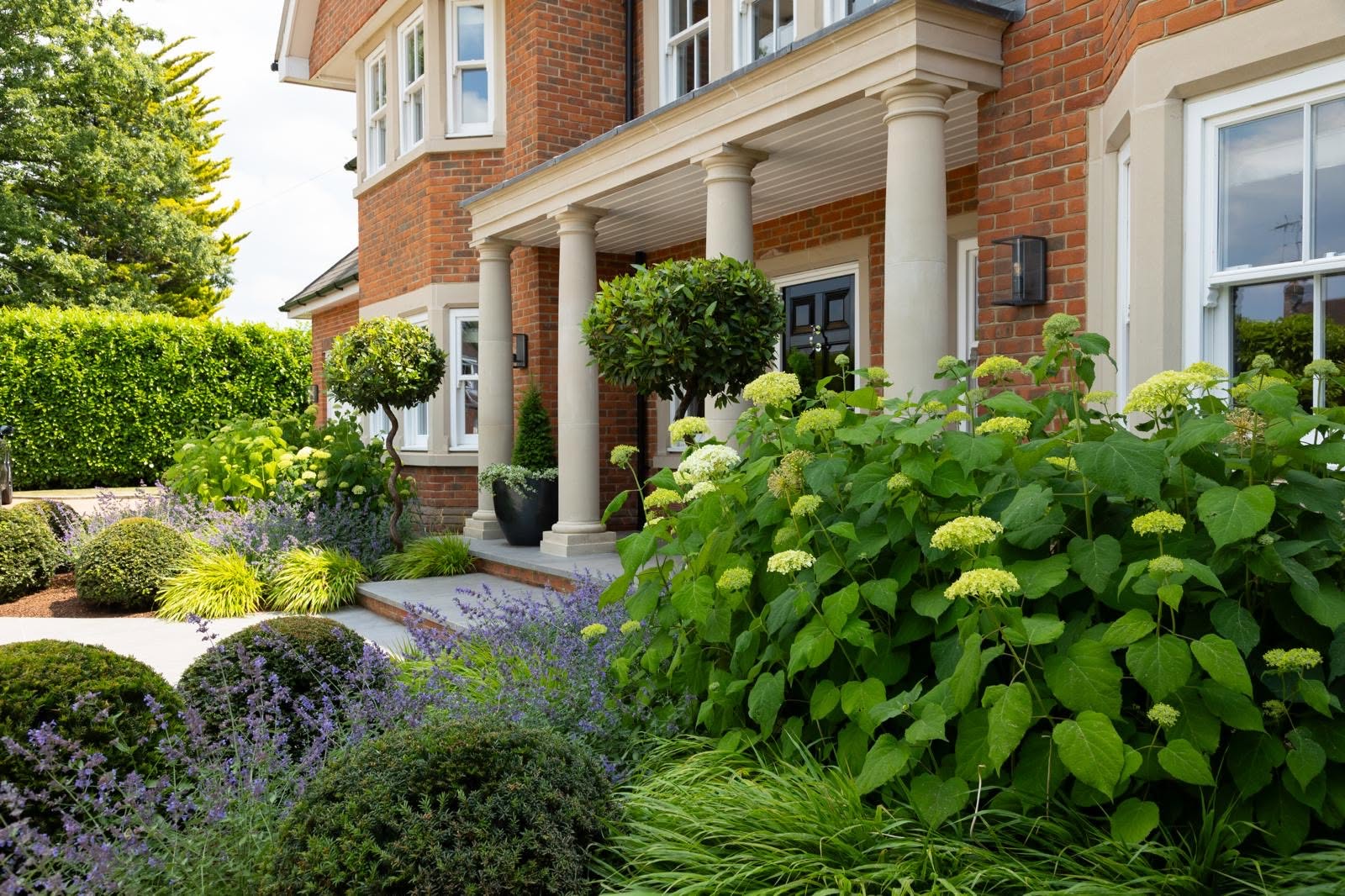
A layered planting arrangement is an inspired way to accentuate your outdoor seating area. Position taller plants at the back to create a natural backdrop, add medium-height perennials or seasonal flowers to introduce colour, and finish with trailing plants in containers to flow gently over the edges.
Here are some plants we love for adding structure, softness and seasonal beauty:
- Tall, Structural Plants: Miscanthus, Bay Tree and Photinia ‘Red Robin’ are stunning, non-invasive choices to add soft movement to your arrangement. Use planters or raised beds for a neat finish.
- Medium-Height and Colourful Perennials: Choose Salvia ‘Caradonna’ to add long flowering and vivid colour. Incorporate Heuchera for colourful foliage that is suitable for pots, and include Japanese Anemone for an elegant touch. To craft a naturalistic look, group each of these perennials in threes or fives.
- Trailing Plants: Creeping Jenny’s vibrant lime-green foliage can be used to brighten the front edges of your seating area. Assembling your arrangement with Bacopa and Trailing Lobelia will bring in more delicate colours of white, pink, purple and blue.
If you’d like added benefits, consider choosing herbs such as rosemary, jasmine or thyme. They will add a pleasant scent to your space and are useful in the kitchen. Position these near seating edges or in small pots on side tables to enhance the scent release as you move through or unwind in the space.
How We Can Help
We hope this step-by-step guide has highlighted that all you need to create a cosy outdoor seating area is thoughtful design, a few key materials and a sense of style. By finding the perfect spot, adding comfortable furniture and eye-catching plant arrangements, you can shape a seating space that’s practical, relaxing and uniquely yours.
If you’re considering transforming your garden into a personal sanctuary, we’d love to help. At Raine Garden Design, we specialise in designing functional outdoor living areas that reflect your lifestyle and bring you joy season after season.
Contact us today to book a free initial consultation.