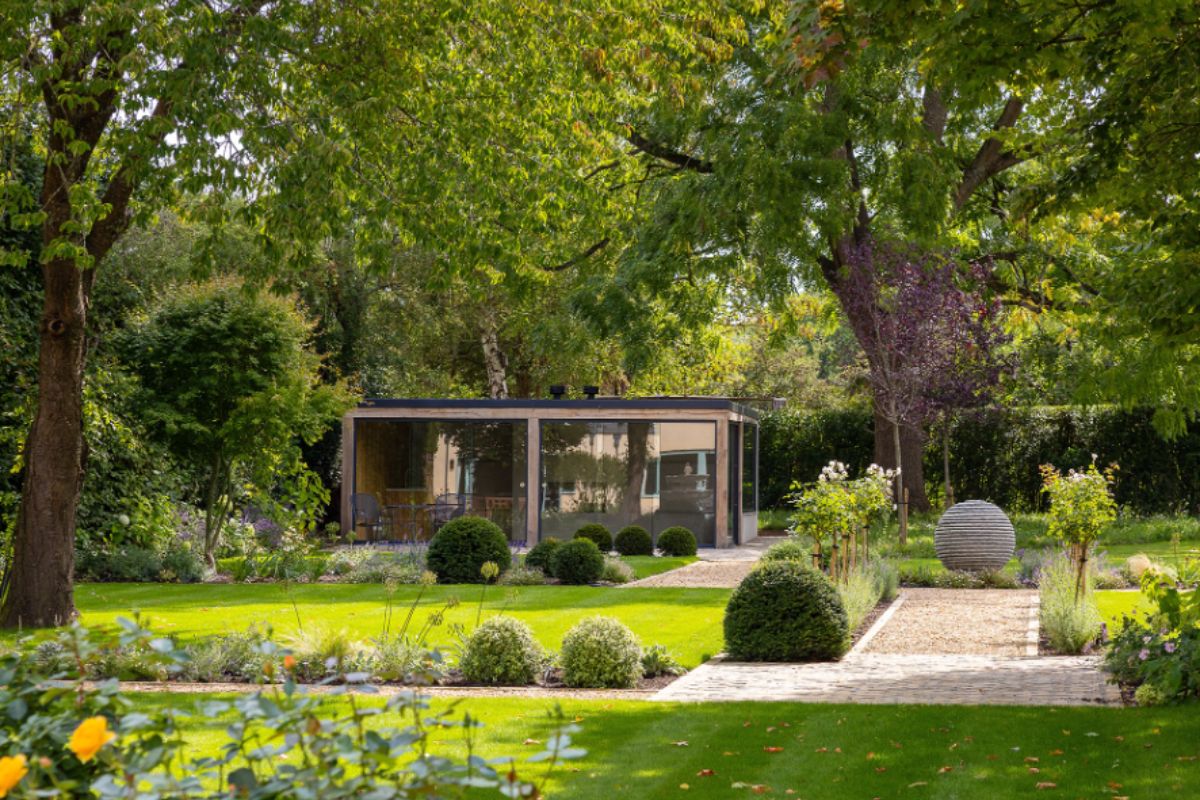
Winter tends to strip your garden back to its essential elements. It removes your beautiful blooms, lush foliage, and fragrant summer herbs, exposing your garden’s structure.
At Raine Garden Design, we believe structure is the foundation of your garden. If your garden looks a bit flat, sparse or disconnected during winter, it’s often a sign that the underlying structure needs attention.
This is the perfect time to examine the lines, shapes, and silhouettes that carry your garden through all seasons and find ways to improve them. Whether you’re dreaming of a modern courtyard, a soft cottage garden, or your own quiet retreat, good structure is crucial.
In this guide, we’ll walk you through how to structure your garden in the winter.
How to Structure Your Garden in the Winter
Here are the 6 key steps to structure your garden this winter:
1. Define the Framework
Winter enables you to clearly see your garden’s bones, such as its layout, flow and foundational elements. This means you can use this season as an invitation to evaluate what’s working well and where you can support your garden.
Begin by taking a good look at your garden from different angles, even from inside your home. Ask yourself if there are any areas that feel too sparse or cluttered, whether your paths lead somewhere, and whether your garden feels cohesive.

If you’re feeling uncertain in answering those questions, your garden may benefit from a stronger framework. This doesn’t mean you need a full redesign; it can simply mean adding clearly defined lines with low hedging, raised beds, or statement planters.
It can be helpful to draw a quick sketch of your garden and note the areas you’d like to add more structure to, so everything is in one place and easier for you to view.
2. Choose Evergreens for All-Season Form
Evergreens are plants that keep their foliage all year round, so they’re a brilliant choice to add more structure to your garden in the winter. They’ll provide the colour, shape and texture your garden yearns for, and they won’t fade in the colder weather.
Just because they’re so useful, it doesn’t mean you should overload your garden with them. It’s better to place them intentionally in key sightlines or transition zones where their presence will anchor the space. A small section of them placed in the right areas can do more for your structure than a whole bed of filler planting.
Our Favourite Evergreens
- Berberis: One of the most versatile, reliable and easy-to-grow shrubs.
- Calluna: Calluna will provide long-lasting flowers from July until November, encourage wildlife and work well in containers.
- Fatsia: While often treated as houseplants, fatsias are strong enough to survive outdoors and will add some shape to your garden.
- Hydrangea: Hydrangeas will brighten your borders in the summer with their pink, white or blue flowers, and many have a very autumnal colour and leaf shape.
- Photinia: An ornamental shrub or tree with small white flowers, red berries and often colourful leaves in the autumn. The most well-known is the ‘Red Robin’, which has striking red foliage.
If you have a small garden, adding a few potted evergreens can be transformative, especially when placed near doors or windows.
3. Add Movement With Grasses & Seed Heads
When we’re talking about structure, this doesn’t always mean rigidity. In fact, some of the most effective winter gardens balance structure with softness, with grasses being the secret ingredient.
Grasses such as Calamagrostis, Miscanthus, and Pennisetum bring verticality, movement and a golden glow when caught in the winter sun. If you leave them be until the early spring, they’ll provide seasonal drama and a natural habitat for insects.

You can combine grasses with perennial seed heads such as Lunaria annua, Ophiopogon planiscapus, or Eryngium, as their darkened, sculptural forms look striking against a backdrop of evergreens or a frosted lawn.
If you’re unsure what grasses, seed heads or other elements of your garden structure to choose, we’re here to support you. Contact Raine if you’re interested in commissioning a garden or planting plan, with a free initial consultation.
4. Highlight Architecture With Bare Branches and Bark
Trees and shrubs offer some of the most design options for your winter garden with their branching patterns, bark textures, and silhouettes.
To add winter architecture, consider Cornus alba for vibrant red stems, Betula utilis var. jacquemontii for white bark that stands out against dark fencing or hedging, or Salix alba for vertical scarlet stems, perfect for wet or open areas.
These plants add both height and create shadows that change with the day’s light.
5. Enhance Hard Landscaping as Focal Points
Hard landscaping plays a prominent role in winter, as your planting isn’t drawing as much attention, making your structures, shapes and shapes more visible.
It’s a good time to evaluate your paths, patios, fences, and boundaries, particularly whether they’re serving your space the way you want them to, whether they lead the eye where it should go, and whether anything feels out of proportion.

Make any necessary changes and consider adding a feature wall or trellis for climbing plants and architectural interest, raised beds to create height variation, cedar slats or a cosy outdoor seating area.
6. Use Lighting to Shape & Define
Your garden is often enjoyed from indoors or after dark, so lighting is a crucial tool in winter. Successful garden lighting should enhance structure and soften mood, not overwhelm it.
On any of your architectural trees or textured walls, you can add uplights, whereas near your pergola or seating area, you can add festoon lights or lanterns to create a warm atmosphere.
To help guide movement, it can be useful to add ground-level path lights.
Choose warm, white LEDs throughout your garden to create an ambient feel, or battery-operated lanterns if you’d prefer not to install lighting.
Ready to Bring Structure to Your Winter Garden?
We hope this guide has given you ideas for structuring your garden in winter.
At Raine Garden Design, we design gardens that feel as thoughtful in winter as they do in bloom. Whether you’re planning a new layout, adding structure to your existing space, or beginning a full transformation, we’re here to help you create a garden that feels good every day of the year.
Contact Raine if you’re interested in commissioning a garden or planting plan, with a free initial consultation.